Remote AI Operations: Why Desk-Bound Automation Is Already Obsolete
The latest wave of AI tooling enables true location-independent automation. Here's what that means for businesses building intelligent systems that work while.
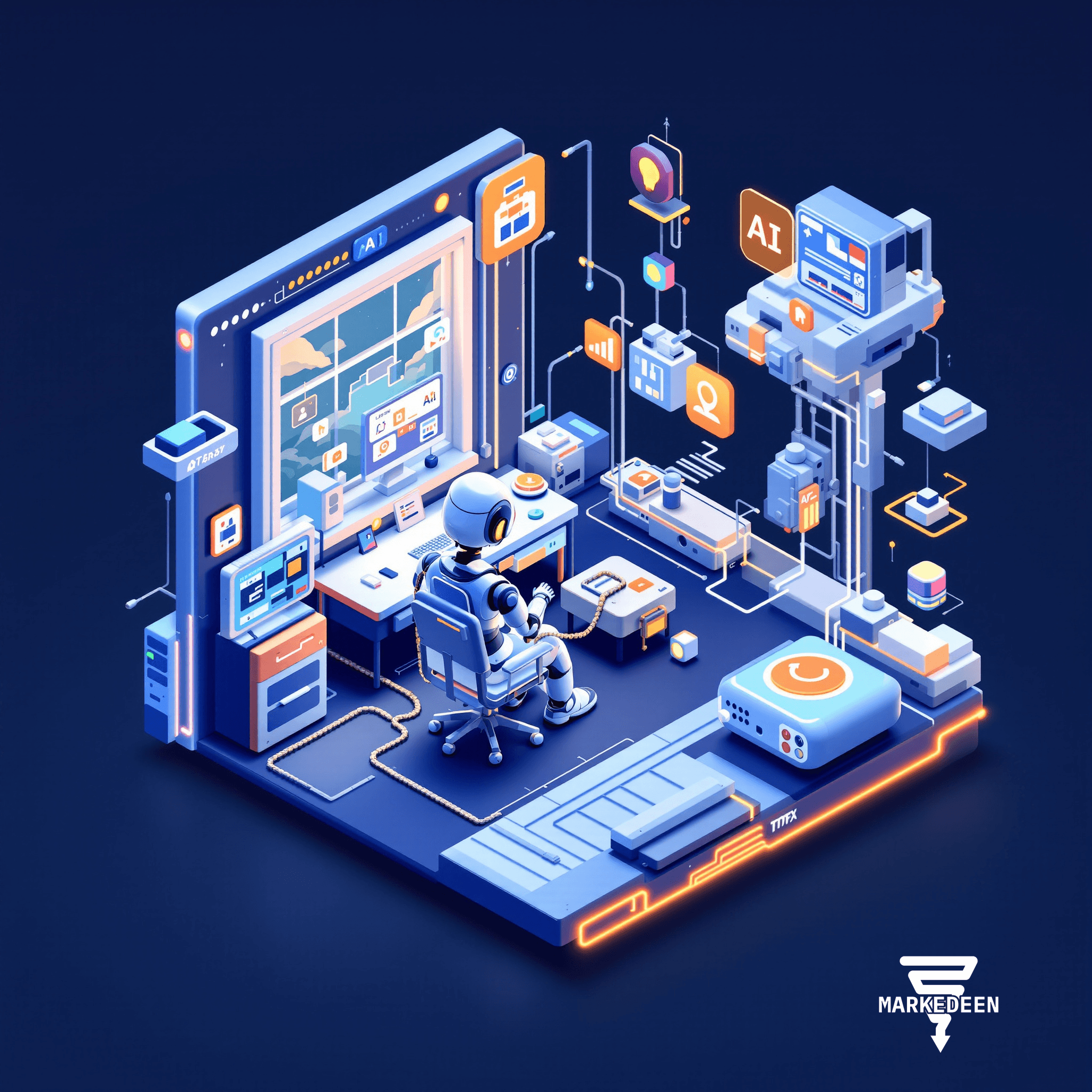
We've been watching something shift in how businesses interact with their AI automation infrastructure. For the past year, most companies running sophisticated AI agents have been tethered to their workstations, monitoring outputs, approving next steps, checking logs. That constraint just evaporated.
The ability to control local AI operations remotely isn't just a convenience feature. It fundamentally changes what kinds of business systems become practical to build.
The Real Constraint Wasn't Processing Power
When we talk to clients about AI automation, the conversation usually centers on model capability, accuracy, or integration complexity. Those are real considerations. But the hidden bottleneck has been human availability.
Consider a content research system that mines customer feedback, analyzes competitor positioning, and generates strategic briefs. The AI can handle the heavy lifting, but someone still needs to be present to kick off the process, monitor for errors, and validate outputs. That "someone needs to be there" requirement has kept entire categories of automation in the proof-of-concept phase.
Now imagine the same system accessible from anywhere. You're meeting a client, you trigger the research process from your phone, and by the time you're back at your desk, you have a complete analysis waiting. The work happened without you being physically present at a terminal.
That's not a minor improvement. That's a different operating model.
What Location-Independent AI Operations Actually Enable
At Markedeen, we've been testing remote-accessible automation across several client projects. Three patterns have emerged that weren't viable before:
Asynchronous decision loops. AI systems can now run multi-hour processes while you're in meetings, traveling, or focused on other work. You check in periodically from your phone, approve key decision points, and let the system continue. The constraint isn't the AI's capability. It's your availability. Remote access solves that.
Persistent agent monitoring. When you build agents that operate over hours or days (think lead qualification sequences, data enrichment pipelines, or content production workflows) you need to know when something breaks or requires input. Being able to check system status from anywhere means these longer-running processes become practical for smaller teams.
True pocket infrastructure. The real unlock is psychological. When your automation infrastructure is genuinely accessible from your pocket, you start thinking differently about what to automate. Tasks that seemed too small or too sporadic to justify building a system for suddenly become viable. The activation energy drops.
The Technical Reality: Local Execution, Remote Interface
Here's what matters from an implementation standpoint: these remote-accessible systems aren't running in some distant cloud. They're executing locally on your infrastructure, with full access to your private data, internal tools, and custom configurations. The remote interface is just that, an interface.
This architecture matters because it preserves the security and customization benefits of local execution while removing the location constraint. Your AI agents still have access to your complete business context, your proprietary tools, your private databases. You're not sacrificing capability for mobility.
Of course, this creates new requirements. Your local machine needs to stay running. You need stable internet. The terminal session must remain active. These aren't trivial constraints, but they're manageable for most business applications, especially if you're running automation on a dedicated machine rather than your personal laptop.
What This Means for Automation Design
We're starting to redesign client systems with the assumption of remote access from the ground up. That changes the architecture in subtle but important ways.
More granular checkpoints. When you might be monitoring from your phone, you need clearer decision points and more digestible status updates. Systems need to be built for intermittent attention, not continuous monitoring.
Notification intelligence. If an agent can reach you anywhere, it needs to know when it's worth interrupting you. That means building better logic around what constitutes a critical decision versus what can wait.
Mobile-friendly interfaces. This sounds obvious, but many internal tools assume a desktop screen. When your automation infrastructure needs to be controllable from a phone, the interface constraints matter. Simple, clear, scannable.
The Bigger Pattern: Ambient Access to Business Intelligence
Step back from the technical implementation and consider what this enables at the business level. You're moving toward ambient access to your company's intelligent systems.
Your lead qualification agent, your content research pipeline, your customer feedback analyzer, these aren't tools you sit down to use. They're capabilities you can invoke and monitor from anywhere, weaving them into your workday rather than carving out dedicated sessions.
This is how AI automation starts to feel less like software you operate and more like a team that works in the background. You check in, you give direction, you review output. But you're not bound to a desk.
What We're Building Toward
At Markedeen, we're now designing automation systems with a specific question in mind: could this entire workflow be initiated and monitored from a phone?
That constraint forces clarity. It pushes us toward systems that are genuinely autonomous between decision points, that surface information intelligently, that don't require constant babysitting.
The companies that adapt their AI infrastructure for remote access first will have a meaningful operational advantage. Not because remote access itself is magic, but because building systems that work remotely forces you to build better systems, ones that are more autonomous, more intelligent about when to interrupt, more resilient to intermittent attention.
If you're running AI automation that still requires someone to be physically present at a workstation, you're already operating with a constraint that doesn't need to exist. That's worth examining.
We're helping businesses redesign their automation infrastructure for this new operating model. If that's a conversation worth having for your organization, we should talk.
More on Automation
Want a system like this in your business?
We build the automation behind everything you just read.