When Your AI Assistant Works While You Sleep: The Rise of Always-On Business Systems
From reactive automation to proactive AI systems that monitor, decide, and execute 24/7—what becomes possible when your business infrastructure never stops.
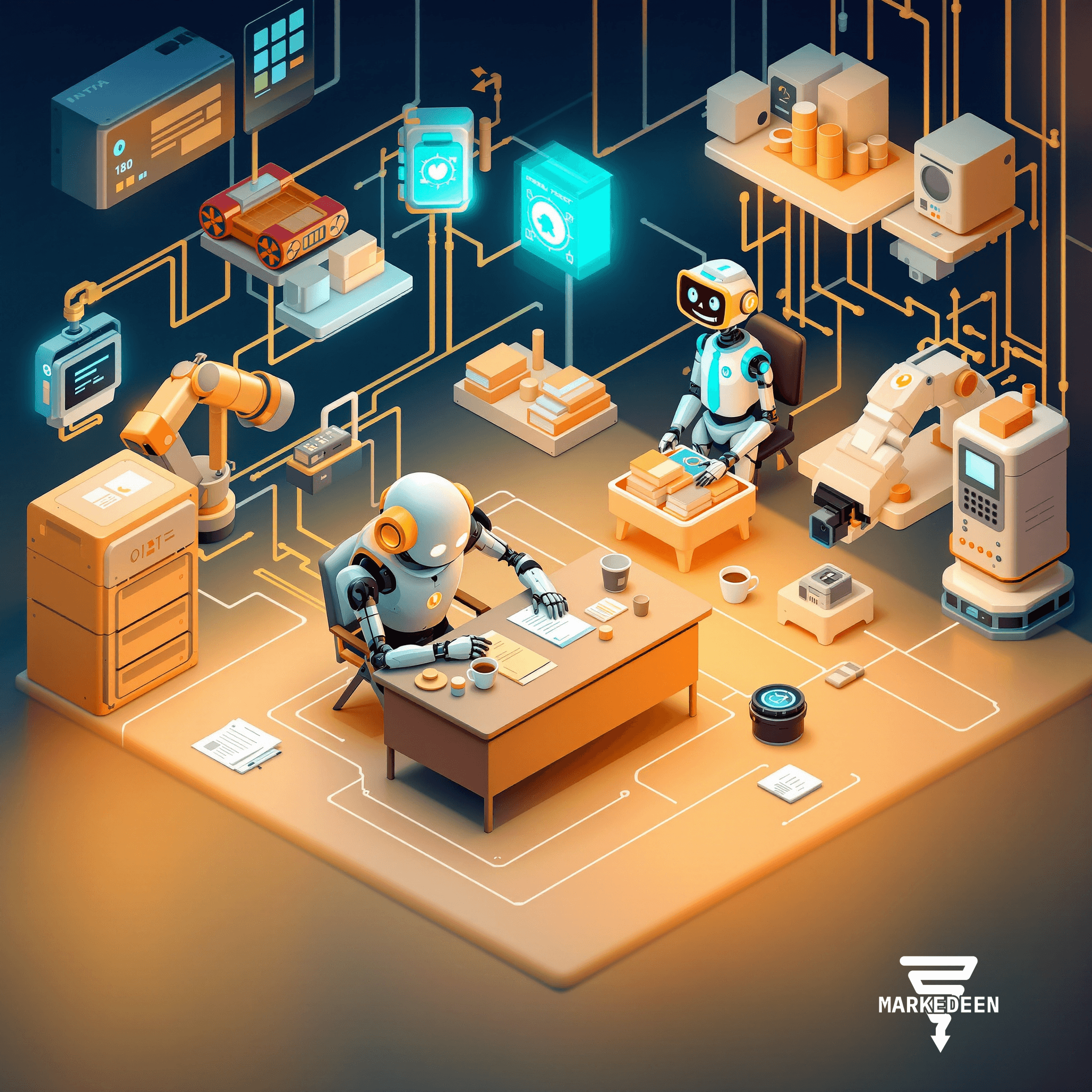
At Markedeen, we've been watching something fascinating unfold: the gap between "automation that waits for a trigger" and "systems that actively think and act" is collapsing faster than anyone expected.
A year ago, most businesses were excited about workflow automation. Click a button, data flows from A to B, maybe a report gets generated. That was progress. Today, we're seeing founders build AI systems that monitor their email overnight, analyze their content performance at 3am, and have action items waiting before the first coffee gets poured.
The shift isn't just about speed. It's about presence.
The Infrastructure Question Nobody Asked
For decades, business automation meant scheduled tasks. Run this report every Monday. Send this reminder at 9am. Check for new leads every hour. The system did exactly what you told it, when you told it, nothing more.
Now we're entering a different paradigm entirely. Systems that evaluate context, make judgment calls, and operate continuously without explicit scheduling. An AI layer that can read your project management tool, notice a deadline slipping, research solutions, draft a recovery plan, and flag it for your review, all before you realize there's a problem.
The technical name doesn't matter. What matters is the capability: ambient intelligence that wraps around your existing business infrastructure.
What Changes When Systems Stay Awake
We've been testing this architecture with our own operations, and three patterns keep emerging.
First, proactive becomes possible. Traditional automation is inherently reactive. Something happens, then the automation responds. But when you have a system monitoring multiple data streams continuously, it can spot patterns you'd never catch manually. A competitor launches a campaign. Traffic drops on a key landing page. A client mentions a pain point buried in a casual Slack message. The system notices, connects dots, and surfaces insights without being asked.
Second, context accumulates. Every interaction, every decision, every piece of business knowledge gets retained. Ask your system about a client conversation from three weeks ago, and it remembers. Reference a strategy discussion from last quarter, and it can pull relevant details. This isn't just convenient, it fundamentally changes how knowledge moves through an organization.
Third, capacity scales differently. Hiring a virtual assistant means coordinating schedules, writing SOPs, managing handoffs. Spinning up an AI system means defining access boundaries and letting it expand into whatever operational gaps you point it toward. Need someone monitoring social mentions? Tracking competitor content? Auditing your analytics weekly? The marginal cost approaches zero.
The ROI Nobody Talks About
Here's what we're actually measuring: reduction in decision latency.
How long does it take from "we should probably look into that" to "here's what we found and three options to consider"? In most businesses, that cycle is measured in days or weeks. With always-on AI systems, it shrinks to hours.
One of our clients used to spend every Monday morning manually pulling performance data from five different platforms, formatting it into a report, and trying to spot trends. Now their system does it overnight, every night, and flags anomalies in real-time. The time savings are nice. The shift from "weekly review" to "continuous monitoring" is transformative.
Another client built a system that watches their customer support channels, categorizes common issues, and drafts knowledge base articles before the team even realizes a pattern is emerging. The ROI isn't just efficiency. It's catching problems at a fundamentally earlier stage.
The Security Conversation We're Not Having
None of this matters if the foundation is shaky.
When you give an AI system access to email, project management, financial tools, and API keys, you're creating a single point of failure that's genuinely dangerous if misconfigured. We've seen organizations rush to deploy these capabilities without thinking through authentication, access boundaries, or blast radius.
At Markedeen, we treat this like hiring a powerful employee with unrestricted building access. You don't hand over the master key on day one. You create read-only accounts. You limit write permissions to sandboxed environments. You run regular audits to check what the system is actually accessing. You assume something will eventually go wrong and design containment from the start.
The teams getting real value from these systems are the ones treating security as a design constraint, not an afterthought.
Where This Actually Works Today
We're not talking about future possibilities. These capabilities are production-ready now, but the use cases that deliver real ROI are specific.
Content operations: monitoring performance, identifying trends, generating analysis, suggesting optimizations. Research and synthesis: continuous competitive intelligence, market monitoring, pulling insights from multiple sources. Operational oversight: tracking project health, flagging risks, maintaining documentation, ensuring nothing falls through cracks.
What doesn't work well yet: anything requiring genuine creativity, complex negotiation, or high-stakes decision-making without human review. These systems are phenomenal at breadth and consistency, mediocre at depth and nuance.
The Build vs. Buy Question
Right now, this space is messy. Tools are evolving weekly. Best practices are still forming. Security standards are immature.
Some businesses are building custom systems from scratch. Others are stitching together existing platforms. Most are somewhere in between, experimenting cautiously while their competitors wait for the dust to settle.
At Markedeen, our view is simple: the teams experimenting now, making mistakes in controlled environments, and learning how these systems actually behave in production, those are the teams that will have a structural advantage in twelve months.
The capability gap between businesses that master always-on AI infrastructure and those that don't is going to be stark. Not because the laggards are incompetent, but because this isn't just a tool upgrade. It's a different operating model entirely.
If you're exploring what always-on intelligence might look like for your operations (what to build, what to integrate, how to do it safely) we're happy to talk through what we're seeing work in practice.
More on Automation
Want a system like this in your business?
We build the automation behind everything you just read.