Why CLIs Beat APIs and MCPs for AI Agent Integration
Command-line interfaces solve a problem APIs and Model Context Protocols can't: keeping massive tool outputs out of your AI agent's context window entirely.
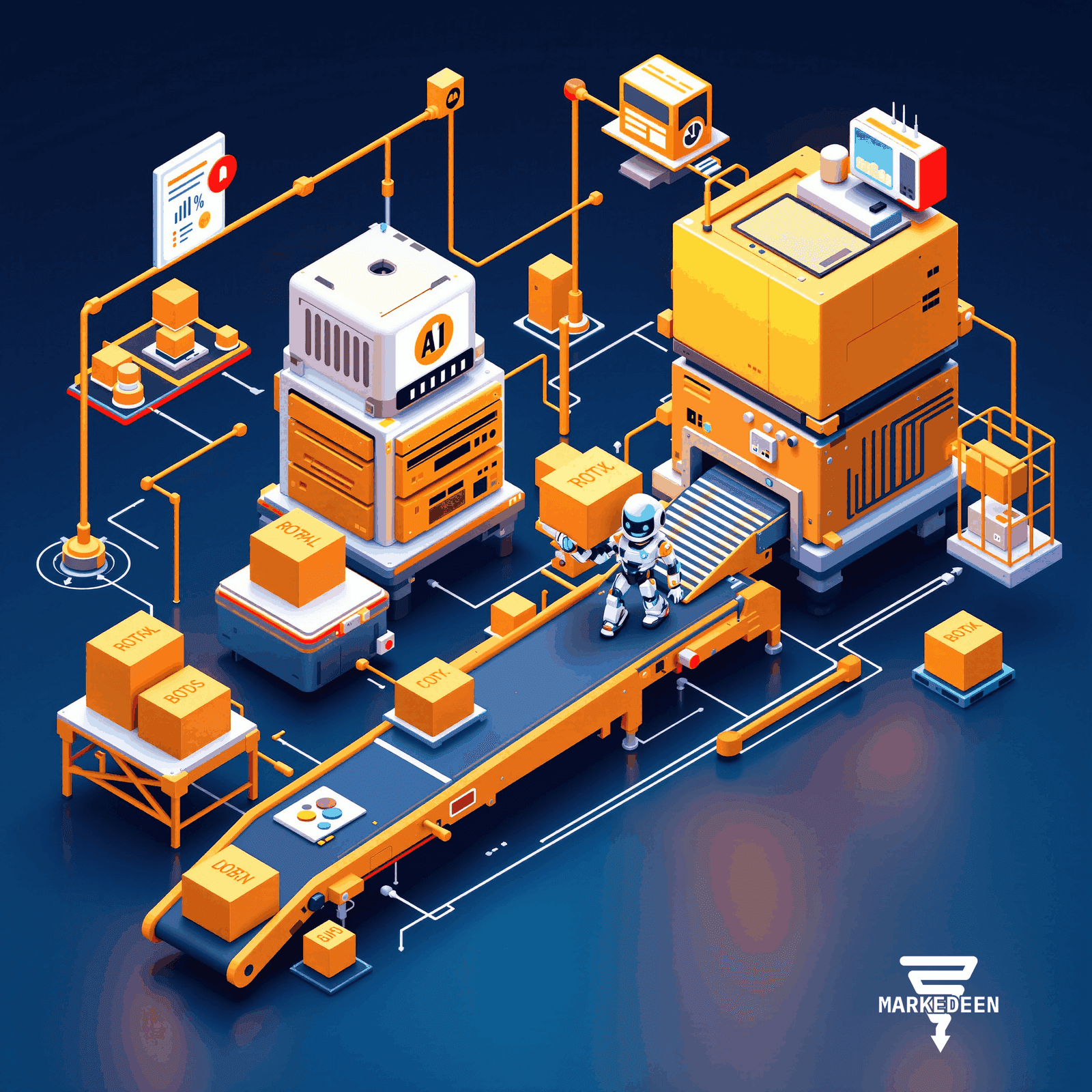
Command-line interfaces are emerging as the most efficient integration layer for AI agents, not because they're new, but because they solve a problem APIs and Model Context Protocols can't: keeping massive tool outputs out of your context window entirely. When an agent can route external service data without loading it into the session, you've just made complex workflows economically viable. For agencies building production AI systems, this architectural choice directly impacts margins.
The Hidden Cost of API-First Integration
Most teams default to APIs when connecting AI agents to external services. The pattern is familiar: authenticate, make a request, parse JSON, feed the response back into the agent's context. It works. But it's expensive in ways that don't show up until you're deep into production.
Every API response lands in your context window. A Google Drive file list? Thousands of tokens. A multi-page document fetch? Tens of thousands of tokens. Retrieve a week's worth of email threads? You've just consumed a substantial portion of your session budget before the agent even starts reasoning. The problem compounds when you chain multiple API calls, each response stacks on top of the last, context bloats, and you're either hitting limits or paying for overflow.
Model Context Protocol (MCP) was supposed to fix this. It provides a standardized way for agents to talk to external systems, and it does solve the integration chaos problem. But it doesn't solve the token problem. MCP still routes everything through the context window.
How CLIs Route Around the Context Window
A command-line interface takes a different path. Instead of returning data into the agent's session, it processes the request, performs the work, and returns only a summary or confirmation. The full payload never touches the context window.
Example: an agent needs to check a cloud storage folder for new files, download three of them, and summarize their contents. With an API-first approach, you're fetching file metadata (tokens), downloading each file (tokens), parsing content (tokens), then feeding all of that back to the agent for summarization (more tokens). With a CLI-first approach, the agent issues a bash command, the CLI executes locally, processes the data, and returns a compact result. The agent sees the outcome, not the raw data.
This architectural pattern is why developers are building CLI wrappers for services that previously only offered APIs. The CLI handles authentication, pagination, error handling, and data transformation locally, surfacing only what the agent needs to make decisions.
What This Means for Production Systems
If you're building AI automation for clients, this is infrastructure-level thinking that directly impacts your margins. A system that consumes massive token volumes per run can become expensive quickly. Rebuild the same system with CLI-first integration and you can dramatically reduce token usage. Same output, same client value, substantially lower operating costs.
The shift also changes what's possible. Workflows that were too expensive to run frequently (daily data syncs, proactive monitoring, multi-stage research pipelines) become viable when you're not paying to load every intermediate result into context.
Building Your Own CLI Wrappers
You don't need to wait for official CLIs to exist. The pattern is straightforward: wrap an API in a bash-compatible interface that does the heavy lifting locally and returns only essential results. You define the endpoints, specify what the agent needs back, and create a command-line tool the agent can call like any other system utility.
When to Use Each Approach
| Integration Type | Best For | Token Efficiency | Setup Complexity |
|---|---|---|---|
| API Direct | Simple, one-off queries; services with minimal response sizes | Low, full responses hit context | Low, standard HTTP libraries |
| MCP | Standardized multi-tool integrations; when consistency matters more than token costs | Low, routes through context window | Medium, requires MCP server setup |
| CLI | High-volume workflows; services returning large datasets; production cost optimization | High, only summaries hit context | Medium, requires wrapper development |
The Bottom Line
When you're building AI systems that need to interact with external services at scale, integration architecture isn't just a technical decision. It's an economic one. CLIs keep agent sessions lean, reduce token consumption, and make complex automations viable. For teams building production systems, this is the kind of infrastructure choice that compounds: every session optimized, every context window preserved, every dollar not spent on unnecessary tokens is leverage you can reinvest in better models, faster iteration, or simply higher margins.
---
We help agencies and product teams build AI systems that scale without burning budgets on token overhead. If you're designing automation architecture and want to explore CLI-first integration, reach out, we'd be happy to talk through what makes sense for your stack.
More on Engineering

Want a system like this in your business?
We build the automation behind everything you just read.