Why Your Roadmap Makes You Slow (And What AI-Native Teams Do Instead)
The fastest AI teams don't win with better models, they win by moving repeatable coordination out of meetings and into durable systems. Here's what that actually looks like in practice.
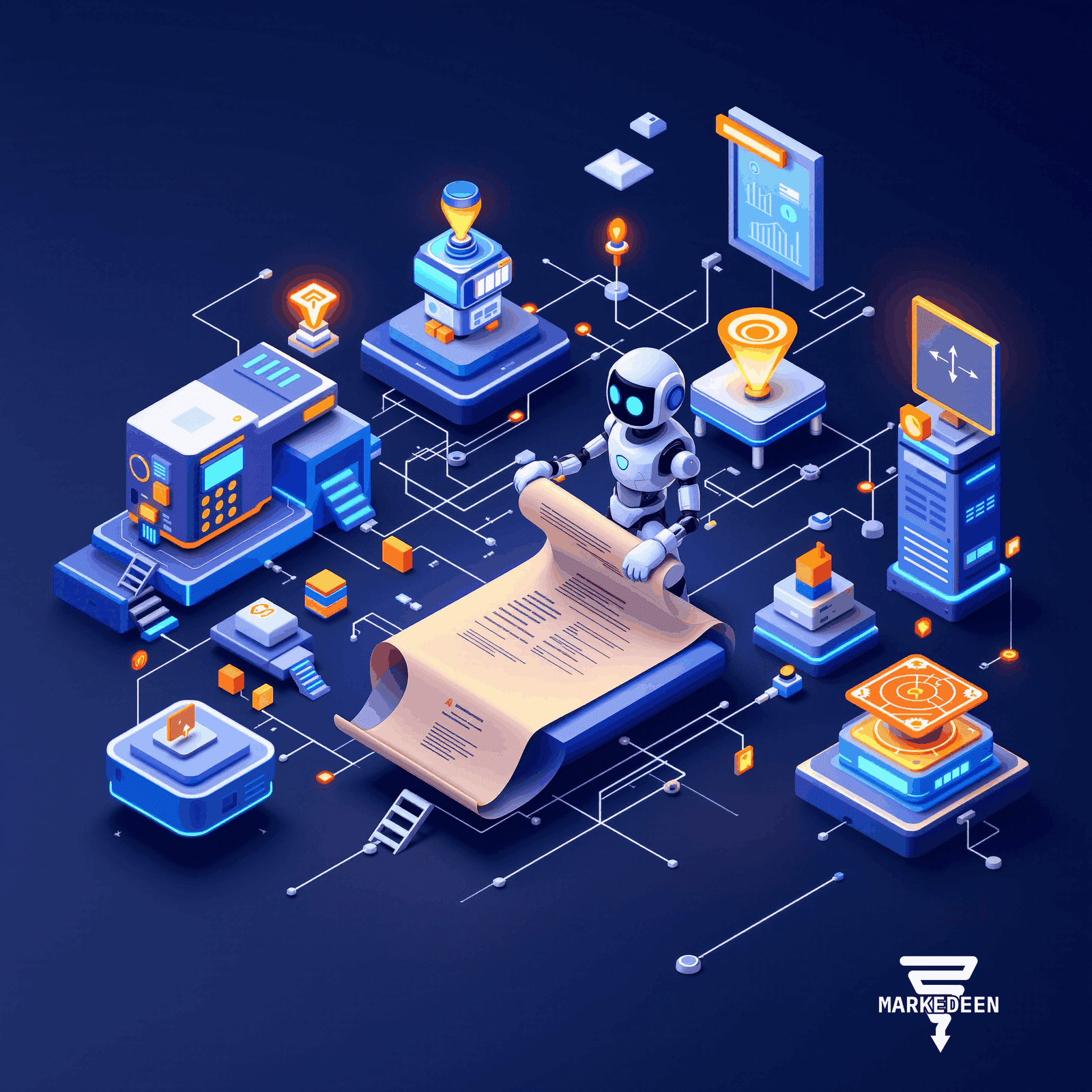
The fastest-moving teams in AI aren't winning because they have better models or bigger budgets. They're winning because they've stopped treating coordination as something that happens in meetings and started treating it as something that lives in code. When decisions vanish into Slack threads and product judgment sits three layers away from implementation, your roadmap becomes the bottleneck, no matter how thoughtfully you planned it.
What Makes AI-Native Teams Actually Fast?
Companies shipping at pace (Anthropic releasing weekly, startups iterating in days instead of quarters) share a structural advantage that has nothing to do with the AI tools themselves. They've moved repeatable coordination out of human conversation and into durable systems that agents (autonomous software that can read instructions and take actions) can read, act on, and improve.
Traditional roadmaps front-load planning into lengthy cycles: quarterly reviews, cross-functional alignment meetings, ticketing handoffs, approval chains. By the time a decision reaches the person who can actually build it, the context has degraded through multiple retellings. Execution gets backloaded into compressed timelines with no room to adapt when reality diverges from the plan.
AI-native teams collapse that distance. Instead of a product manager writing a ticket that says "build a search feature that prioritizes recent items," the PM writes the actual filtering logic in a shared repository where both the engineer and an AI assistant can read it, test it, and improve it. Instead of design annotations in Figma that an engineer interprets, the design system itself becomes executable code, a software development kit (SDK) that enforces spacing, color, and interaction patterns automatically.
Reviews become evals: systematic tests that run automatically and flag problems without human intervention. A marketing email doesn't need manual approval if it's passed automated checks for brand voice, legal compliance, and performance thresholds. Repeated reminders, "Did anyone update the pricing page?" or "Has Legal reviewed this?", become automated triggers that notify the right person at the right moment based on actual system state, not calendar dates.
The shift isn't about eliminating human judgment. Trust still requires human relationships. Taste can't be automated. But the *repeatable parts* of coordination, the handoffs, the status updates, the "did anyone see this?", the re-explaining of context, can move closer to code. When that happens, humans stop being the rate limit on execution.
Why Marketing Roadmaps Suffer the Same Pathology
Marketing teams feel this pain acutely. Campaigns get planned months in advance, locked into inflexible launch calendars, divorced from real-time signals. A competitor ships a feature that repositions the market. Your product team pushes an update that changes the value proposition. Performance data shows one message resonating and another falling flat. But the roadmap says you're launching Campaign B next quarter, so Campaign B launches, regardless of whether it still makes sense.
Moving to systematic coordination means marketing can operate more like an AI-native product team. Instead of a launch calendar that says "send email blast on March 15," you write decision logic: "Send email variant A to subscribers who opened in the last 30 days; if open rate drops below 18% after first 1,000 sends, switch to variant B; if a competitor launches in this category, pause and notify team lead." The judgment is yours. The execution becomes automatic and adaptive.
The Real Shift: Where Product Judgment Lives
The most significant change isn't technical. It's organizational. In traditional structures, product judgment lives far from implementation. A VP decides strategy. A PM translates it into requirements. A designer mocks it up. An engineer finally builds it. Each handoff loses fidelity. Each layer adds latency.
AI-native teams push judgment closer to the build. When a PM works in the terminal, the text interface where code actually runs, alongside engineers, they can test an idea in minutes rather than writing a specification and waiting days for feedback. When decisions are documented as structured logic rather than prose meeting notes, anyone can see not just *what* was decided but *why*, and under what conditions it should change.
This doesn't mean eliminating roles or flattening hierarchy recklessly. It means recognizing that when AI can handle more of the repeatable coordination work, the valuable human time shifts. The hour you used to spend explaining the same context in three different meetings can now go toward the judgment call only you can make. But only if the context is already documented in a form that doesn't require you to re-explain it.
What This Looks Like in Practice
Instead of: A weekly meeting to review all outbound emails before send
You create: A checklist of approval criteria (brand voice patterns, prohibited claims, required disclosures) that an AI tool checks automatically. Humans review only flagged exceptions.
Instead of: A PM writing "improve search relevance" in a ticket
You create: A shared document where the PM writes the actual ranking logic ("prioritize items modified in last 30 days, then by title match, then by tag overlap") that both engineers and AI assistants can implement directly.
Instead of: Manually tracking whether each team has updated their Q2 goals
You create: A system that automatically notifies teams when the quarter is two weeks out and their goals document hasn't been touched in 60 days.
The pattern is the same: take a coordination task that requires repeated human explanation, and turn it into a system that runs without you having to re-explain it every time.
What's the first step for a team stuck in the old model? Pick one repeatable coordination task (status updates, approval flows, performance reviews) and ask what it would look like if it lived as structured logic instead of conversation. You don't need to overhaul everything at once. Start with the thing that requires the most re-explaining and move it into a durable system that can be referenced instead of retold.
If your team is spending more time coordinating than executing, the roadmap probably isn't the problem. It's the distance between decision and build. We work with teams to identify where repeatable coordination is creating latency and design systems that collapse that distance. Reach out if you're ready to move faster than your current structure allows.
More on Strategy
Want a system like this in your business?
We build the automation behind everything you just read.