Why Your Choice of AI Coding Platform Directly Shapes Your Business Capability
At Markedeen, we've tested the leading agentic coding platforms under real-world conditions. Here's how choosing the right development environment unlocks entirely different automation systems.
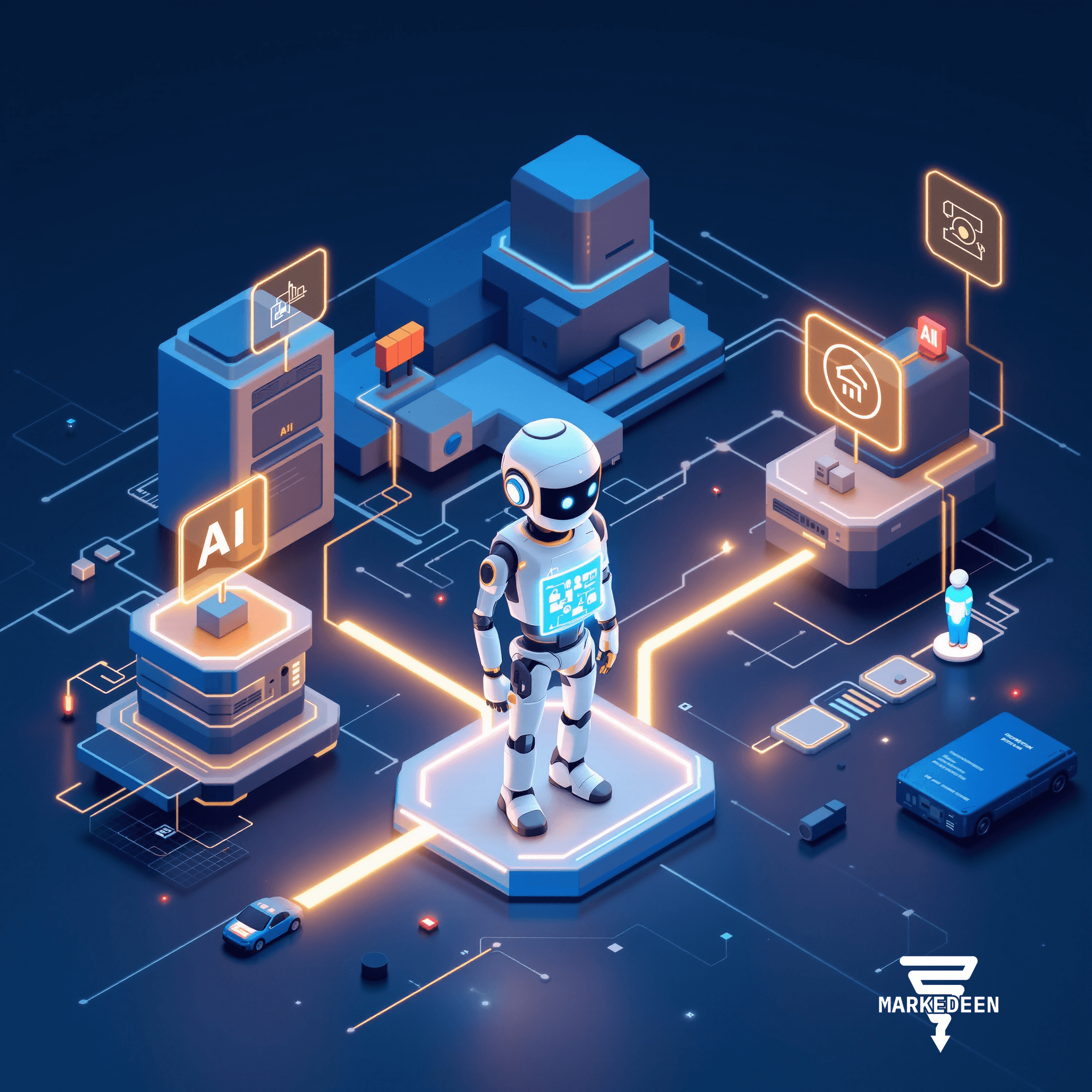
At Markedeen, we've spent the better part of three months stress-testing the two dominant agentic coding platforms on the market. Not for fun. Not for benchmarks. To understand which system architectures they naturally favour, and what that means for the businesses we build.
Because here's what nobody tells you: the platform you choose doesn't just affect speed or code quality. It shapes the kind of systems you can realistically deploy.
The Real Question Isn't Speed or Cost
Most comparison content fixates on token pricing, response times, and whether one model scores 4% higher on an obscure GitHub benchmark. That misses the point entirely.
The platforms we tested, Claude Code and Google Antigravity, aren't just wrappers around language models. They're orchestration layers. One is a CLI-first tool that integrates into your existing development environment. The other is a standalone IDE with a built-in agent manager and browser automation.
Those architectural differences cascade.
Claude Code gives you primitives. You configure workflows, manage context windows, and build on top of your existing stack. It's hackable. When we need an automation that reads Supabase rows, triggers a Playwright test, commits changes via Git, and posts a Slack summary, Claude Code lets us script that orchestration exactly how we want it.
Antigravity packages the orchestration for you. It's an environment you move into. The agent manager shows multiple parallel tasks. The browser agent navigates live web pages without you writing Puppeteer scripts. For rapid prototyping, especially anything customer-facing with a UI, it removes friction.
What We Learned Building Real Systems
We ran three categories of test across both platforms: backend automation, research synthesis, and front-end build quality.
For backend work (habit tracking logic, database schema, API endpoints) Claude Code's planning mode produced more coherent multi-file architectures. It reads your existing codebase, infers conventions, and extends what's there rather than bolting on something foreign. When we asked it to build a full-stack tracker with streak logic and calendar views, the output wasn't just functional. It fit our folder structure and naming patterns.
Antigravity finished faster but drifted slightly from the original spec. We've seen this pattern repeatedly on longer builds: strong first-day output, gradual guideline erosion by day three. It's a known behaviour flagged in Google's own developer forums. Manageable if you architect around it (short, focused sessions) but it influences how you structure work.
For research tasks, Claude Code asked clarifying questions and cited sources. Antigravity delivered a clean PDF in half the time but skipped verification steps. If speed matters more than rigour, that's defensible. If you're synthesising data for a client proposal, it's not.
For UI work, Antigravity consistently produced better-looking interfaces out of the gate. Depth, colour, micro-interactions, it has taste. Claude Code's outputs were structurally sound but visually flat unless we injected custom design instructions.
The Strategic Implication
Here's the part that matters for business.
If you're building client-facing MVPs, landing pages, or anything where visual polish is a conversion lever, Antigravity's design sensibility saves iteration cycles. You get something presentable in one pass.
If you're automating internal operations (data pipelines, approval workflows, integration layers) Claude Code's configurability and adherence to existing patterns means fewer edge cases and less refactoring later.
Both platforms support MCP (Model Context Protocol), so you can connect to the same 1,500+ external services. Both have terminal access, so any CLI tool becomes available. The extensibility ceiling is identical. The difference is how you reach it.
Claude Code is faster to ship updates. In Q1 2026 alone, six major platform features dropped, with some weeks seeing three releases. Antigravity is improving but at a notably slower cadence. When you're deciding where to invest learning time, momentum matters.
Token Management Is the Hidden Skill
One pattern held across both platforms: context degradation.
Even with Claude Code's million-token window, sessions longer than 40 exchanges start losing coherence. Antigravity's own troubleshooting docs recommend starting fresh if the agent takes more than ten seconds to respond.
We've built token-management disciplines that apply regardless of platform. Keep sessions task-focused. Compress conversation history. Start new chats often. These aren't workarounds; they're production practices. The teams that learn this early build faster systems.
Our Approach Today
We default to Claude Code for automation builds, backend logic, and anything that needs to integrate tightly with existing infrastructure. The planning depth and structural consistency matter when we're deploying systems that run unsupervised.
We use Antigravity for rapid UI prototyping and client demos where visual fidelity accelerates feedback loops. The faster iteration cycle outweighs the need for deep configurability.
But the larger insight is this: the best businesses will stop asking "which tool is better" and start asking "which capability does this unlock."
Because the real leverage isn't in the tool. It's in knowing which system architecture the tool naturally supports, and designing your operations around that.
If you're building automation infrastructure and want to discuss which approach fits your business model, we're mapping these architectures daily. Reach out, we'd be happy to walk through what we're seeing.
More on Engineering

Want a system like this in your business?
We build the automation behind everything you just read.