Local Models + Claude Code: The 99% Cost Reduction Path
Claude Code's model-agnostic architecture lets you swap Anthropic's paid APIs for local open-source models or OpenRouter's free tier, cutting per-token costs by up to 99%, at the expense of capability, but with cost…
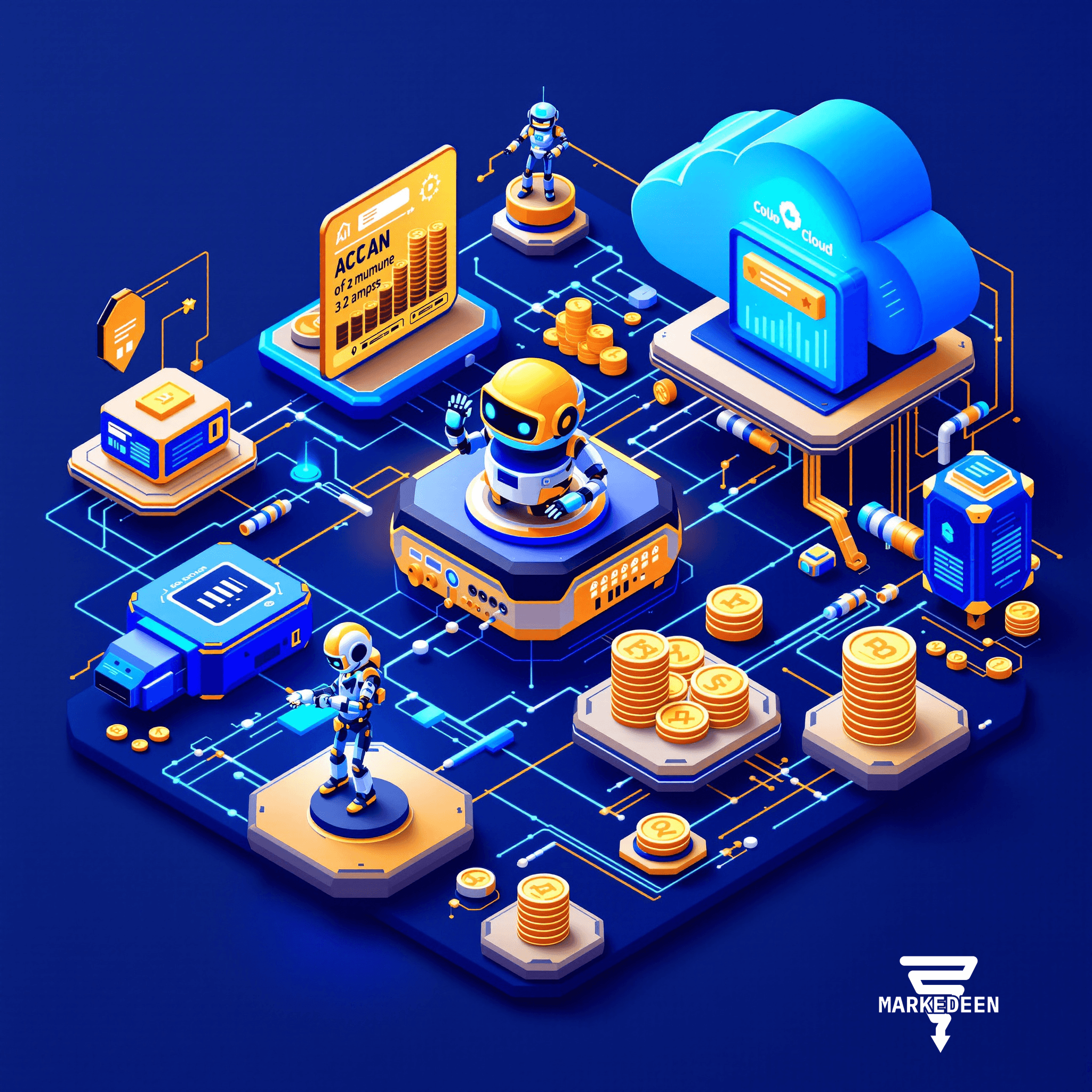
Claude Code's architecture separates the orchestration harness from the language model underneath. That design choice, rarely emphasized in most coverage, unlocks something financially significant: you can replace Anthropic's paid Opus or Sonnet API with a locally hosted open-source model (via Ollama) or OpenRouter's free tier, slashing per-token costs by up to 99%. For businesses running hundreds of agent sessions daily, this shift moves operating expenses from thousands of dollars per month to nearly zero, at the expense of quality and capability, but with cost control that makes 'just try it and see' economically viable.
How the swap works: Claude Code as harness, LLM as engine
Think of Claude Code as the car and the language model as the interchangeable engine. Claude Code provides the tooling layer (file access, command execution, memory management, sub-agent orchestration, hooks, skills) but it doesn't care whether the reasoning underneath comes from Anthropic's Opus, an open-source Llama variant, or Mistral running entirely on your laptop. By default, Claude Code routes inference requests to Anthropic's API, which bills by the token. Configure it to point at a local Ollama instance or OpenRouter's free models, and those API costs vanish. You pay only for the electricity your hardware consumes (local) or zero if you stay within free-tier limits (OpenRouter).
This isn't theoretical. Open-source models, Llama 3.x, Mistral, DeepSeek variants, can run entirely on consumer-grade hardware with no per-token cost. Performance and capability drop meaningfully compared to Opus or GPT-4-class models, but the harness still functions: Claude Code still orchestrates file edits, runs commands, invokes skills, spins up sub-agents. The quality of the reasoning degrades, not the infrastructure.
What you're actually trading away
Open-source models lag frontier closed-source models by 12–18 months in reasoning, context handling, and instruction-following. For deterministic, narrowly scoped tasks (data formatting, simple API calls, structured log parsing) that gap shrinks. For complex reasoning, multi-step planning, or nuanced natural language understanding, it widens. The creator behind the source material reports running local models through the same Claude Code skills he uses with Opus; the orchestration works identically, but outputs require more iteration and manual correction.
For high-volume deterministic workflows where you can tolerate higher failure rates and build retry logic around the agent, the trade works. For customer-facing interactions or high-stakes decision support, it probably doesn't.
The cost control conversation for high-volume use cases
If you're prototyping a single agent workflow, API costs are negligible, a few dollars, maybe tens for heavy iteration. But scale changes everything. Running customer-facing agent sessions 24/7, processing hundreds of requests daily, or testing dozens of workflow variations across a dev team quickly pushes monthly API bills into four figures. At that volume, even a 10x cost reduction matters. A 99% reduction, paying only for local compute or staying under OpenRouter's caps, transforms the economics entirely.
This matters most when:
- Margins are tight. If your product's unit economics can't absorb $0.03–$0.15 per agent interaction, local models make the business model possible where paid APIs don't.
- Experimentation budgets are constrained. Agencies testing workflows for clients, indie builders iterating pre-revenue, or internal IT teams exploring automation can run wild without budget anxiety.
- Volume is unpredictable. If usage might spike 10x overnight, local models cap your downside. API bills scale linearly; local infrastructure scales in steps.
When to choose local, when to choose cloud
Local models (via Ollama): Best for privacy-sensitive workflows, air-gapped environments, or situations where you already own the hardware and marginal cost is zero. Setup friction is higher (you need to install Ollama, download multi-gigabyte model files, configure Claude Code's model endpoint) but once running, there's no metering, no rate limits, no API keys to rotate.
OpenRouter free tier: Best for getting started with zero infrastructure investment. Point Claude Code at OpenRouter's endpoint, use models like Llama 3 or Mistral within their free quotas, and you're running agent workflows without a credit card.
Paid APIs (Anthropic, OpenAI): Still the right choice when quality and reliability matter more than cost. If the workflow's output drives revenue, customer satisfaction, or high-stakes decisions, the premium for frontier models is justified. The cost reduction path is for contexts where volume, experimentation, or margin pressure make paid APIs prohibitive, not where they're merely expensive.
What this makes newly possible
Before local-model compatibility, many high-volume agent ideas died in the spreadsheet phase: the API costs didn't pencil. Now:
- Customer support bots processing thousands of tickets monthly can run locally, paying only for server uptime.
- Internal tooling agents (CI/CD helpers, log analyzers, meeting summarizers) can operate across entire dev teams without metering anxiety.
- Experimentation loops that previously required budget approval can run on spare hardware, removing organizational friction.
The quality won't match what you'd get with Opus, but the barrier to *trying* drops to near-zero. For businesses where 'just try it and see' wasn't economically viable before, it is now.
---
If cost has been the friction keeping you from scaling agent workflows, the path forward is clearer than most assume. Swap the engine, test the output, iterate. The orchestration layer, the hard part Claude Code already solved, doesn't care what's underneath.
More on Engineering
Want a system like this in your business?
We build the automation behind everything you just read.