The Specialist Model Strategy: Why Marketing Needs Multiple Small AIs, Not One Smart One
Enterprise AI adoption is shifting from general-purpose chatbots to purpose-built models that excel at single sensitive tasks. Here's why a constellation of specialized, bounded models protects data while automating workflows.
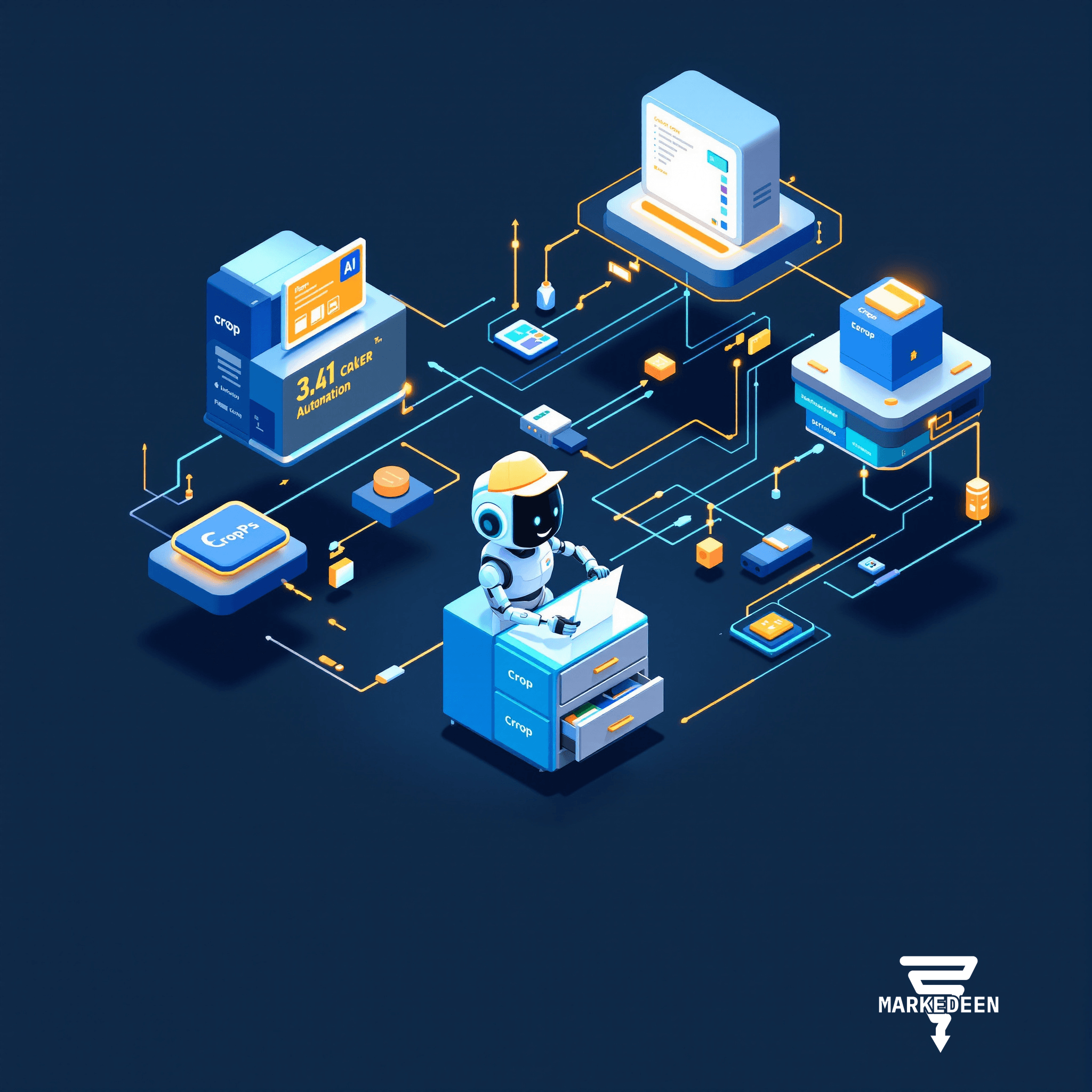
The enterprise pattern emerging in AI adoption isn't 'one chatbot that knows everything'. It's purpose-built models that excel at single sensitive tasks within defined boundaries. A model trained only on contract language, one on pricing templates, one on regulatory compliance. Each operates in isolation, each can be updated independently, each protects a specific data type. This is fundamentally different from the general-purpose ChatGPT-style interface currently dominating marketing AI conversations.
Why companies are choosing specialists over generalists
The shift is already visible in sectors where data sensitivity isn't optional. Discovery Bank fine-tuned five variant models across two smaller source models for separate functions dealing with confidential information, company-specific financial language, SQL formats, custom templates. The result wasn't just safer; response times dropped from five or six seconds to one and a half or two seconds.
Bayer taught a small model its proprietary crop label data and regulatory rules specifically to avoid sending proprietary information to the cloud. Advisors previously spent hours, sometimes days, working through labels that can run past 100 pages. With their crop label data model, that work now completes in under 30 seconds.
What's interesting here isn't just the speed gain. It's the architectural choice. Both organizations chose multiple bounded models over a single comprehensive system. Each model knows one important job and runs inside whatever boundary the company chooses to lay around it.
What this means for marketing operations blocked by data concerns
Marketing teams hit the 'we can't send that to AI' wall constantly. Partnership contracts. Pricing models with margin calculations. Compliance language for regulated industries. Customer data with PII. The instinct has been to either avoid AI entirely or try to build guardrails around a general-purpose tool.
The specialist model strategy offers a different path: build a constellation of small, purpose-built models for specific workflows. A contract review model trained only on partnership agreement patterns. A pricing model that understands your proposal templates and margin rules. A compliance model fine-tuned on the regulatory language specific to your industry. Each protects its data domain while automating its specific function.
This creates a buildable roadmap rather than an all-or-nothing decision. You can start with the workflow where data sensitivity is highest and AI value is clearest. Test the architecture on one use case. Prove the boundary holds. Then expand to the next specialist.
How the boundaries actually work
The critical piece is where these models run and what they can access. In the enterprise examples above, models run in controlled environments, not on general cloud infrastructure, but in spaces only the customer controls. The model sees only the data it's trained on and the inputs it receives. It doesn't phone home. It doesn't cross-reference other systems. It doesn't retain conversations beyond the session.
For smaller teams, this can mean running models locally, downloaded, offline, processing files that never touch the internet. For larger operations, it might mean containerized models in your own cloud environment with strict access controls. The common thread is deliberate isolation: each model has a defined data perimeter, and nothing crosses it.
Old approach vs. specialist model strategy
| General-Purpose Approach | Specialist Model Strategy |
|---|---|
| One AI tries to handle all tasks | Multiple models, each purpose-built for one workflow |
| All data potentially exposed to one system | Each model sees only its specific data domain |
| Updates affect all use cases at once | Each model updated independently without cross-impact |
| Blocked entirely by most sensitive use case | Can deploy where safe, defer where uncertain |
| 'Either trust it or don't' decision | Trust earned incrementally, workflow by workflow |
Where to start with your own specialist models
Identify the marketing workflow where you say 'AI would be perfect here, but we can't because...' most often. That's probably your first specialist. The constraint is the starting point, not the blocker.
Map exactly what data that workflow touches. What goes in, what comes out, what regulations apply, who needs access. Define the boundary before you choose the model.
Start small, truly small. The models in these examples aren't GPT-4 scale. They're smaller, faster, cheaper to run, and they excel at their narrow task because that's all they were taught to do. For many marketing workflows, that's not a limitation; it's the entire value proposition.
We're working with marketing teams to map these specialist model opportunities and design the boundaries that make deployment actually possible. If your AI roadmap is stuck on data concerns that feel unsolvable with general-purpose tools, the specialist strategy might be the unlock you need.
Sources
- Discovery Bank (n.d.) Fine-tuned specialist models reportedly reduced response times from five to six seconds to one and a half to two seconds. Referenced in source material; original report or company disclosure not specified.
- Bayer (n.d.) Specialist crop-label-data model reportedly reduced processing time from hours or days to under 30 seconds. Referenced in source material; original report or company disclosure not specified.
More on Marketing



Want a system like this in your business?
We build the automation behind everything you just read.